
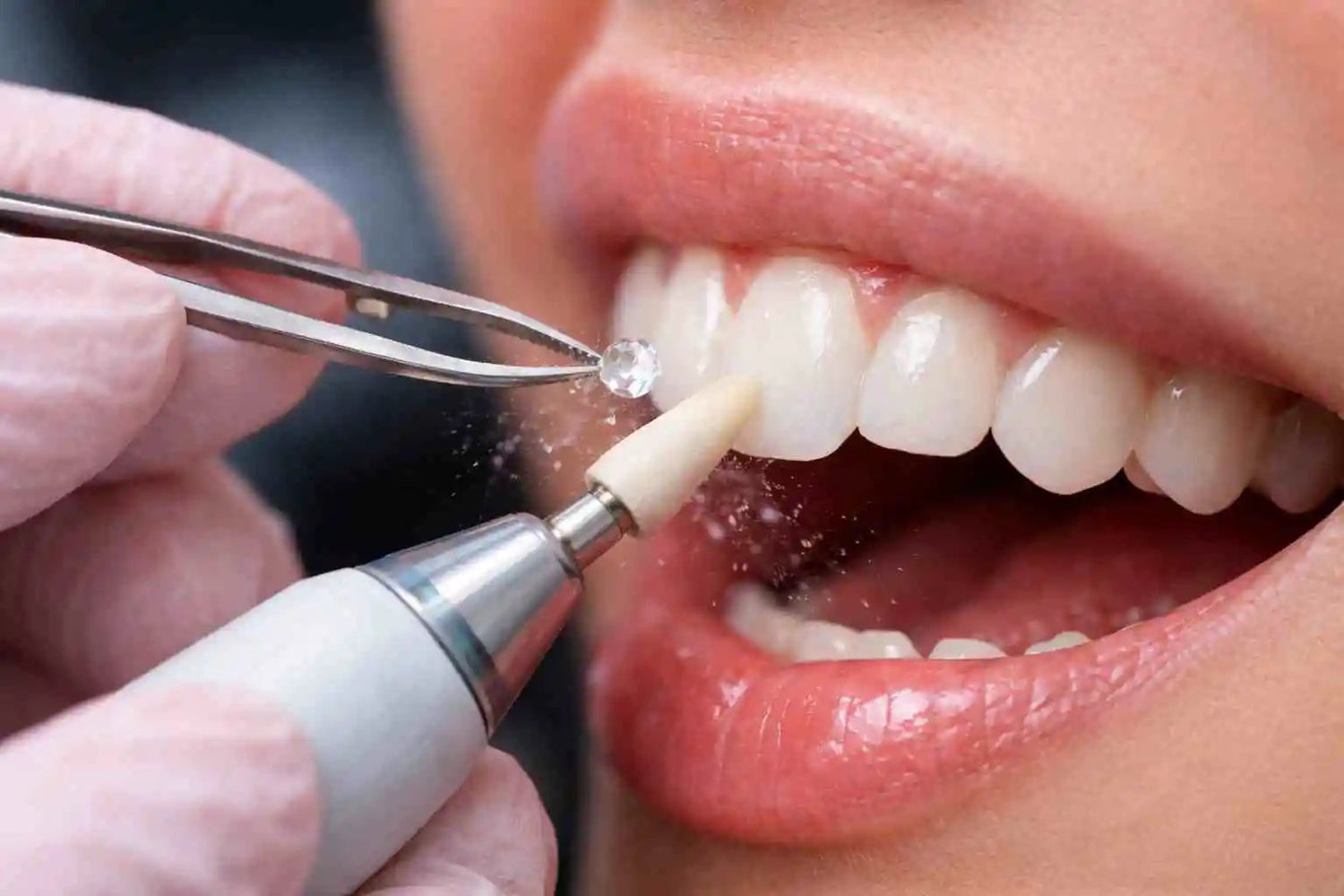
Quick answer: dental jewelry should never be pulled off, scraped with a hard object or removed aggressively. The main risk is damaging the enamel surface or causing sensitivity. To remove a tooth gem, an adapted method should be used, improvisation should be avoided and advice should be requested in case of doubt.
This guide explains the mistakes to avoid, signs to watch and good practices for safer removal.
Summary
- Why removal should be careful
- What you should never do
- When to remove dental jewelry
- Risks of aggressive removal
- What to do if the jewel moves
- Advice after removal
- Safety checklist
- FAQ
Why removal should be careful
Enamel is hard, but it does not regenerate like skin. Even if dental jewelry is small, removing it aggressively can create roughness, discomfort or sensitivity.
Removal should therefore be treated as a technical step, not as a simple gesture done with fingers or an object.
What you should never do
Some actions should always be avoided:
- Scraping the jewel with a metal object.
- Trying to pull it off with fingers.
- Using pliers or an unsuitable tool.
- Forcing if the jewel resists.
- Using a dissolving product not intended for the mouth.
These actions can damage the dental surface or irritate surrounding tissues.
When to remove dental jewelry
A jewel can be removed for several reasons: wanting a new style, discomfort, movement, difficult aftercare or the need for a tooth surface without decoration.
If the jewel is stable and comfortable, there is not always urgency. If it moves, catches or causes discomfort, it is better to ask for suitable advice.
Risks of aggressive removal
Poor removal can lead to:
- roughness on the tooth;
- sensitivity to cold or heat;
- local irritation;
- discomfort when brushing;
- a less clean visual aspect on the area.
These risks can be limited by avoiding force and using an adapted method.
What to do if the jewel moves
If the jewel starts moving, do not pull it. Avoid playing with it with the tongue, limit contact with the area and ask for advice.
A mobile jewel may eventually detach, but forcing it increases the risk of poor removal. The right reaction is to protect the area until suitable removal.
Advice after removal
After removal, the area should be monitored. It is normal to check the tooth, but avoid scraping or rubbing too hard.
- Brush the area gently.
- Watch for unusual sensitivity.
- Avoid aggressive gestures on the surface.
- Ask for advice if the tooth feels rough or sensitive.
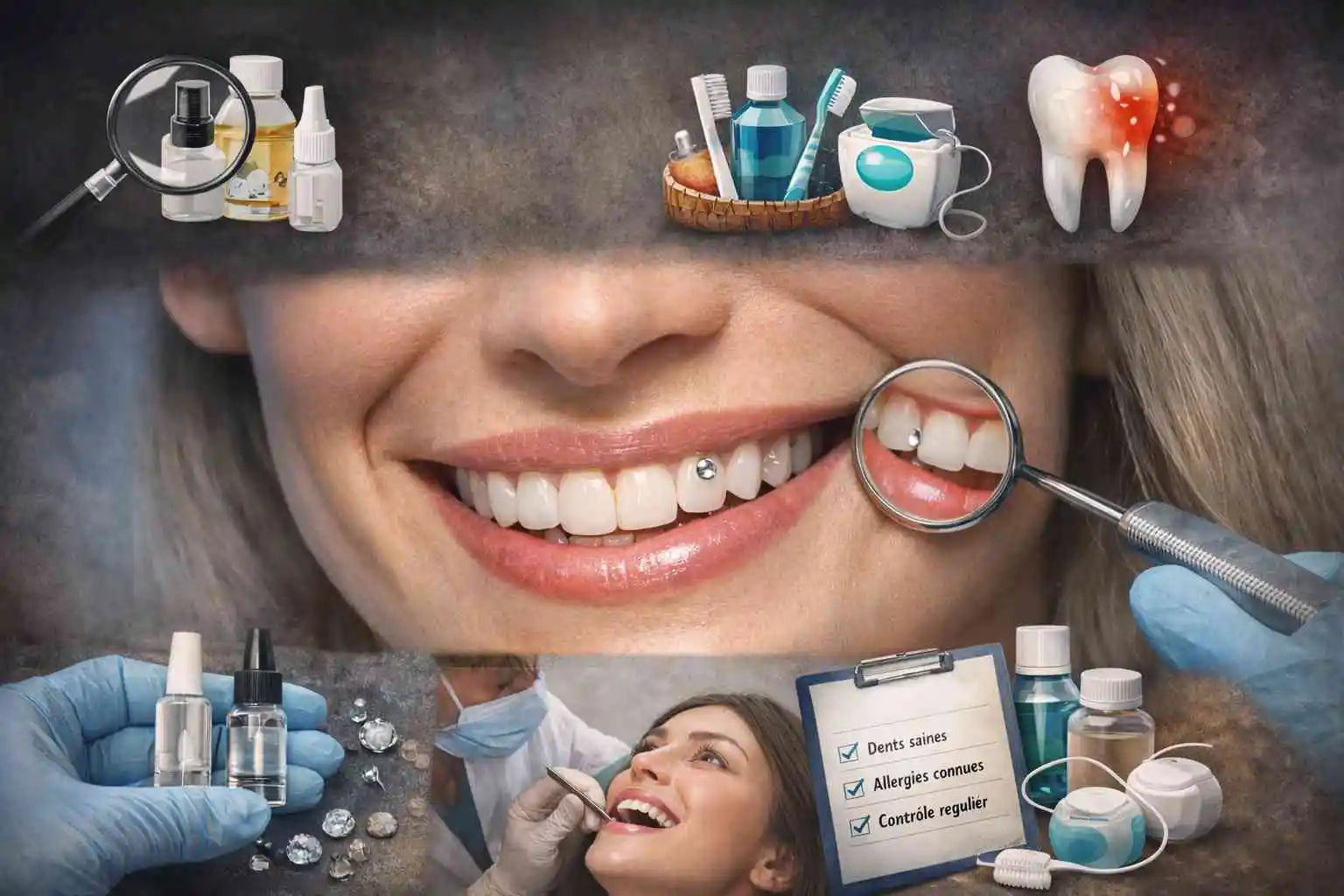
Safety checklist
- Do not scrape the jewel.
- Do not use a hard or metal object.
- Do not force if the jewel resists.
- Do not play with the jewel if it moves.
- Ask for advice in case of doubt.
- Monitor the area after removal.
- Keep gentle hygiene around the tooth.
Recommended reading
FAQ
Can you remove dental jewelry yourself?
It should not be pulled off or scraped. Removal should use an adapted method to limit risks for enamel.
What if the jewel comes off by itself?
Avoid manipulating it or scraping the area. If discomfort appears, it is better to ask for advice.
Can the tooth remain marked?
A rough or sensitive surface can appear if removal is aggressive. That is why force should be avoided.
How long should you wait before a new application?
It is better to wait until the area is comfortable and clean before considering a new application. Ask for advice in case of doubt.
Is removal painful?
Adapted removal should not be painful. Persistent pain or sensitivity should be taken seriously.
Conclusion
Removing dental jewelry requires caution. The most important point is to never scrape, pull or force it. An adapted removal method helps preserve the tooth surface and avoid preventable discomfort.

Leave a comment
This site is protected by hCaptcha and the hCaptcha Privacy Policy and Terms of Service apply.