

Clear answer: hygiene can reduce some tooth-gem risk factors, but it cannot make the practice risk-free. The American Dental Association advises against cosmetic tooth gems; the American Academy of Pediatric Dentistry identifies plaque retention, decay, gum inflammation and sensitivity among possible concerns.
This guide focuses on practical prevention. For a detailed explanation of complications and warning signs, read tooth gem risks.
Before application: decide whether conditions are suitable
- Postpone if there is pain, unexplained sensitivity, suspected decay, a crack, damaged enamel or irritated gums.
- Ask a dentist if there is uncertainty or orthodontic treatment.
- Choose a proportionate, traceable gem positioned sufficiently far from the gum and tooth edge.
- Read instructions and check dates, storage, and compatibility between materials and curing light.
- Exclude nail glue, super glue and household adhesives.
Use the pre-application checklist so that an apparent absence of pain is not mistaken for an absence of risk.
Workstation and handling
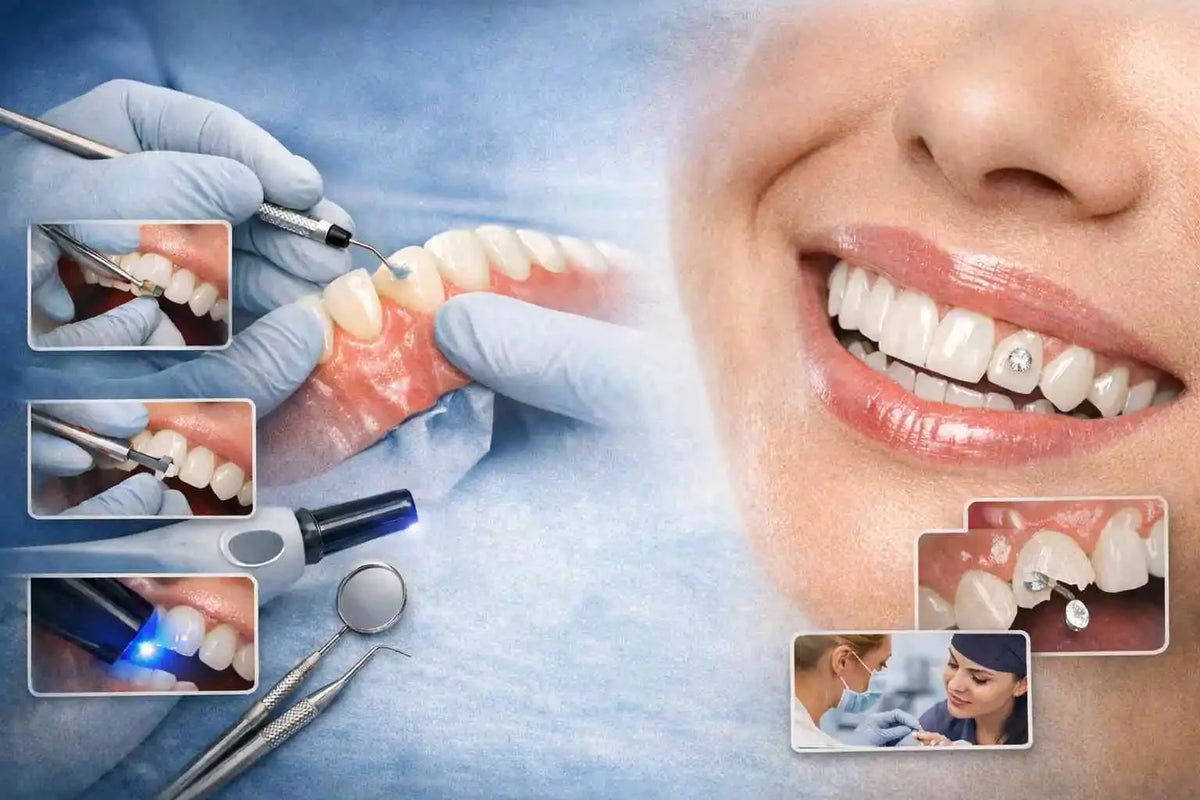
A stable setup reduces contact and interruptions. The workstation should be clean, clear and prepared before the sequence begins. Hands, instruments, surfaces and consumables should be managed under the hygiene rules applicable to the activity.
- Prepare only the equipment required.
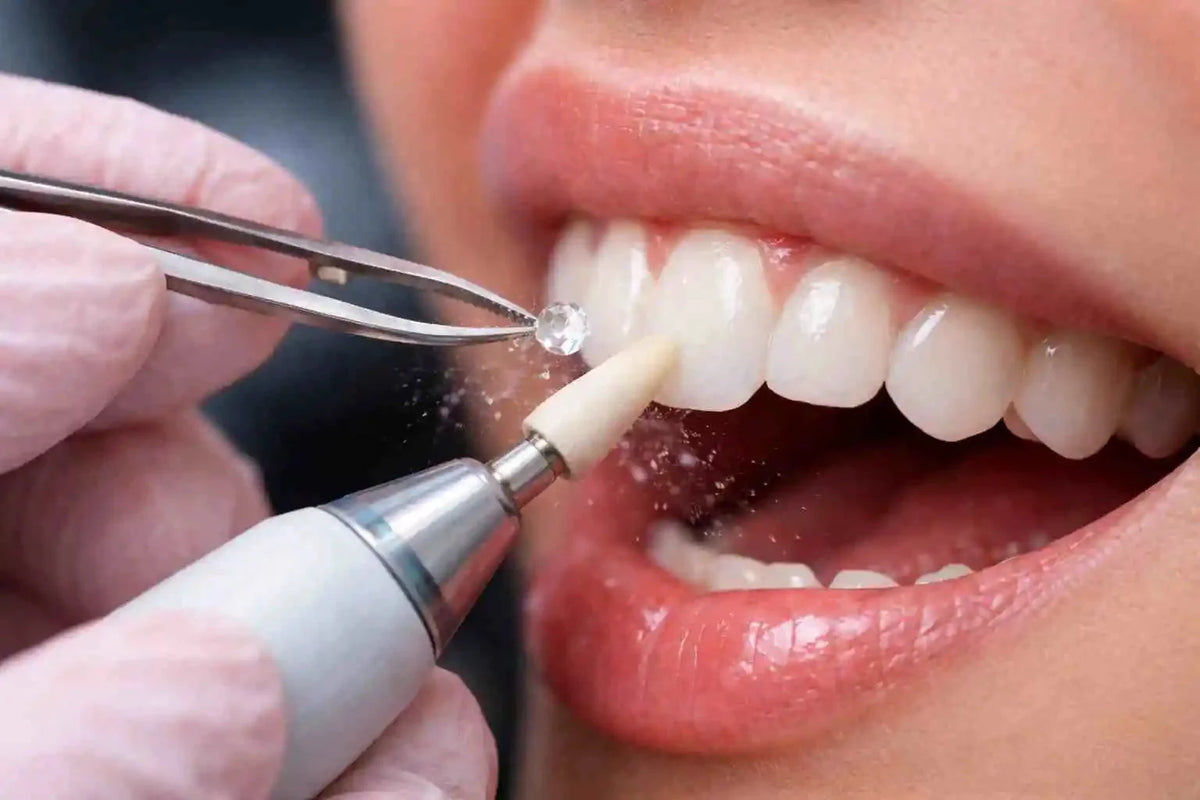
- Handle the gem as little as possible.
- Avoid touching working ends and relevant surfaces.
- Do not reuse a single-use item.
- Stop if cleanliness or moisture control can no longer be maintained.
For a detailed setup, see workstation organization and hygiene.
During application: follow the system being used
Technical products have different roles and should not be mixed at random. Order, quantities, timing, and curing-light output and wavelength should follow the system instructions. A marketing claim about long retention does not replace this check.
- Maintain a clean surface and control moisture.
- Reduce repeated adjustments and unnecessary contact.
- Avoid visible excess around the gem.
- Check placement, stability and comfort before finishing.
After application: hygiene continues
The raised edge of a gem may retain plaque and debris and make cleaning more difficult. Continue brushing the tooth and surrounding edge carefully rather than avoiding the area. Do not play with the gem, test it with the tongue or bite directly on it.
Client instructions are detailed in the aftercare guide.
When to stop handling and seek advice
- Pain or sensitivity that appears or persists.
- Red, swollen, painful or bleeding gums.
- A loose or rough gem, or interference when closing the mouth.
- A stain, color change or area that cannot be cleaned properly.
- A lost gem with breathing difficulty or another unusual symptom: seek medical help without delay.
Do not scrape or pull a loose gem. A dentist can examine the area and arrange suitable removal.
Hygiene checklist
- ☐ The apparent condition of the tooth and gum has been considered.
- ☐ The gem and placement allow cleaning.
- ☐ Products are identified, traceable and compatible.
- ☐ The workstation and consumables are prepared.
- ☐ No improvised glue is used.
- ☐ Aftercare instructions are understood.
- ☐ Warning signs and the removal plan are known.
Sources and editorial scope
- American Dental Association: Oral Piercing/Jewelry
- American Academy of Pediatric Dentistry: oral jewelry policy
- Oral Health Foundation: Tooth gems and grillz
Tooth Gems World editorial content, updated September 4, 2026. Sources accessed September 4, 2026. General information only; it does not replace a dental examination, diagnosis or treatment.

Leave a comment
This site is protected by hCaptcha and the hCaptcha Privacy Policy and Terms of Service apply.