
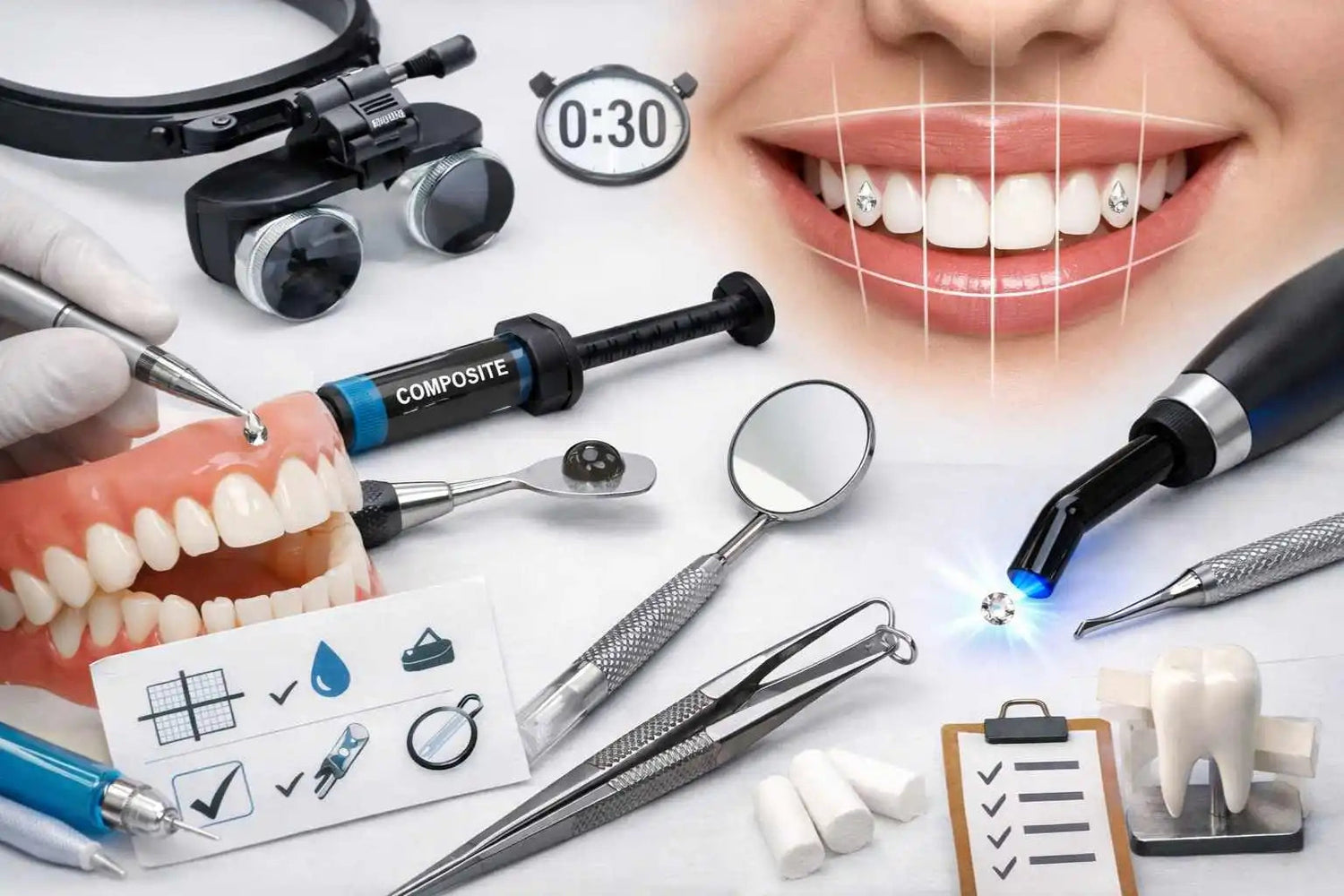
Quick answer: successful placement of tooth jewellery relies on simple reference points: axis of the tooth, height, distance from the edge, size of the jewelry and checks from the front and side. Consistent placement is not a question of luck, but of method.
Why placement is decisive
A well-chosen piece of jewelry can seem less successful if it is poorly placed. Placement influences harmony, comfort, visibility and perception of quality.
Good placement must respect the shape of the tooth and remain consistent with the real smile.
Reference points to check
- Axis: the gem should align with the tooth.
- Height: neither too low nor too close to the edge.
- Distance: keep a comfortable margin.
- Symmetry: check from the front and side.
- Visual clarity: the design should be easy to recognise at a glance.
Avoid imprecise placement
Frequent errors often come from placement based solely on intuition, a jewel that is too large, an area too exposed to friction or a missing final check.
For a cleaner result, it is better to choose fewer elements but position them better.
Before bonding, fitting sticks help preview sizes, shapes and compositions near the smile.
Useful links
Conclusion
The precision of placement transforms a simple application into a polished result. The best designs are often those that feel right, look balanced and suit the tooth.
To learn more about “Precision and placement: successful placement of dental jewelry”: the guidance below offers a practical way to decide. It does not replace each product’s instructions or advice from a qualified professional.
Turning advice into a repeatable workflow
Consistent results depend on reliable preparation: equipment arranged in order, a clear work surface, a visual check before application and client instructions prepared in advance. Standardizing these steps reduces the risk of omissions without eliminating the adaptation necessary for each smile.
Operational checklist
- Prepare jewelry, consumables and tools before the client's arrival.
- Validate the design, size and placement before starting.
- Limit unnecessary handling during the procedure.
- Check the appearance from the front, in profile and when the smile is relaxed.
- Provide clear and realistic aftercare instructions.
After each service, note the difficulties encountered and the useful adjustments. This short analysis makes it possible to gradually improve the workstation, communication and precision of your technique without sacrificing quality for speed.
As you explore Precision and placement: successful dental jewelry placement, check the product details, intended use and stated precautions. Base your choice on verifiable information, not a broad promise or a single image.


Leave a comment
This site is protected by hCaptcha and the hCaptcha Privacy Policy and Terms of Service apply.