

Quick answer: before choosing where to have a tooth gem applied, start by asking a dentist. Then check the local legal framework, hygiene, product traceability, risk information, aftercare and the removal plan.
An attractive photo gallery or low price is not enough to demonstrate safety or competence.
1. Start with the health of the tooth
The Oral Health Foundation recommends talking to a dentist before tooth jewelry to understand the risks and check teeth and gums. Pain, sensitivity, suspected decay, a crack, irritated gums or orthodontic treatment are reasons to postpone.
The pre-application checklist brings these points together.
2. Check who may provide the service and under which rules
Permitted activities, required qualifications, hygiene rules and responsibilities vary by country and sometimes region. Ask who performs the service, what qualification they hold, which insurance covers the activity and where you will be referred if a problem occurs.
A commercial course or attendance certificate does not, by itself, prove legal authorization or clinical competence.
3. Observe actual hygiene
- The workstation is clean, clear and prepared before application.
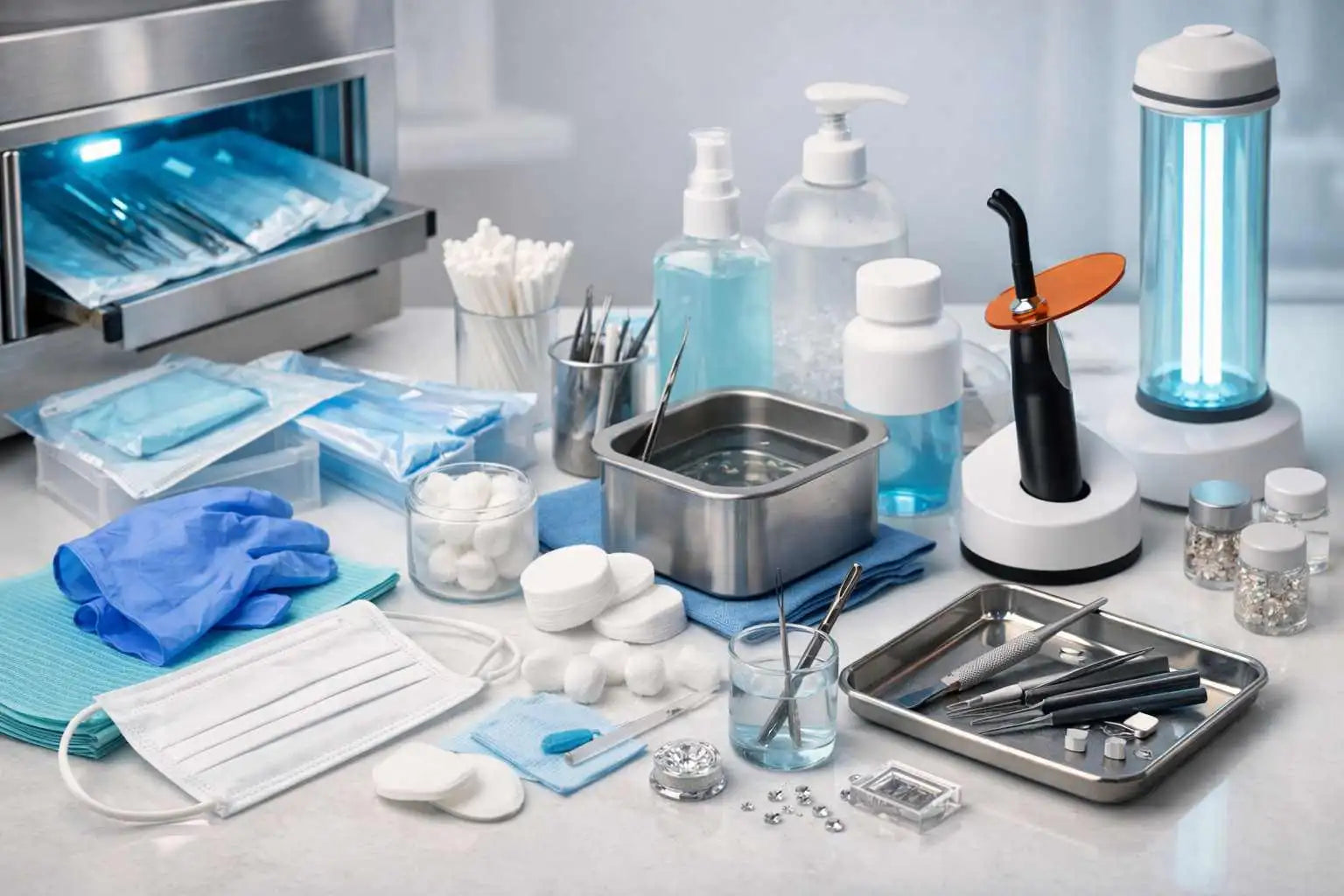
- Hands, surfaces, instruments and consumables are managed under an explainable protocol.
- Single-use consumables are not reused.
- The gem is handled as little as possible.
- The service can be stopped if suitable conditions are lost.
For detailed criteria, read hygiene and safety.
4. Ask for product traceability
The provider should be able to identify the products and explain intended use, batch, date, storage and compatibility with the curing light. Nail glue, super glue and household adhesives are immediate stop signs.
The words “dental glue” are not enough. Review the bonding-product criteria.
5. Assess the quality of information
Before agreeing, you should understand possible risks, limits of retention, aftercare, warning signs and removal. Be cautious with claims such as “risk-free”, “permanent”, “guaranteed” or “no consequences”.
- Placement is discussed before bonding.
- The provider knows when to refuse or postpone.
- Instructions are provided in writing or in a memorable format.
- A contact and dental referral plan exist if a problem occurs.
Questions to ask before booking
- What is your legal framework and qualification for this service?
- Which products and curing light do you use?
- Can you show the instructions, batches and dates?
- How do you manage instruments, surfaces and consumables?
- When would you refuse an application?
- Which aftercare instructions do you provide?
- What should I do if the gem moves, the gum becomes irritated or pain appears?
- Who performs removal and checks the tooth?
Warning signs
- Use of glue not intended for the oral environment.
- Products without labels, batches, dates or instructions.
- A dirty workstation, reused consumables or vague hygiene answers.
- No assessment of the tooth’s condition or refusal to postpone despite a visible problem.
- A risk-free or guaranteed-duration promise.
- At-home removal advised by scraping, pulling or using a solvent.
After application
Keep useful product information and follow the aftercare instructions. Pain, persistent sensitivity, inflammation, a loose gem or an area that is difficult to clean are reasons to consult a dentist. Removal should not be improvised.
Sources and limits
- American Dental Association: Oral Piercing/Jewelry
- American Academy of Pediatric Dentistry: oral jewelry policy
- Oral Health Foundation: Tooth gems and grillz
Tooth Gems World editorial content, updated September 4, 2026. Sources accessed September 4, 2026. Check applicable regulations with the relevant authorities; this guide is not legal or dental advice.


Leave a comment
This site is protected by hCaptcha and the hCaptcha Privacy Policy and Terms of Service apply.