Quick answer: To choose the right place to get a dental jewel placed, opt for a trained professional who uses appropriate dental materials, maintains impeccable hygiene, and follows a clear protocol (preparation, bonding, final check). Avoid DIY applications or places without proper documentation. A professional application protects the enamel, minimizes irritation, and improves the jewel's durability.
Summary
- 1. Why choosing the installation location is essential
- 2. Essential criteria for choosing a professional
- 3. Hygiene and safety: the telltale signs
- 4. Materials and techniques: what a good practitioner uses
- 5. Institute, salon, office: what are the differences?
- 6. Common mistakes to avoid
- 7. Checklist before booking
- 8. After application: how to maximize hold
- Recommendations
- FAQ
- SEO DATA
1. Why choosing the installation location is essential
A dental jewel is fixed to the enamel: this is a hard surface, but sensitive to improper application. Improper application can promote plaque retention around the jewel, irritate the gums if the placement is unsuitable, or create an unstable fit (early detachment, snagging, discomfort).
In their recommendations to the general public, healthcare professionals primarily emphasize key points to be aware of: hygiene, bonding techniques, and the risks associated with unregulated practices. The key message: it's not "inherently dangerous," but it becomes risky when the protocol is imprecise or the materials are unsuitable. This is a source of safety alerts.
Choosing the right place therefore means choosing: safety , quality of output , and durability .
2. Essential criteria for choosing a professional
2.1 Real competence (and not just “a pretty feed”)
The first filter is competence. A good practitioner must be able to explain: surface preparation, the type of adhesive, the curing time, and above all, how to avoid damaging the enamel. Visual appeal matters, but technique is even more important.
2.2 A clearly announced installation protocol
A reliable professional will describe the process: cleaning, isolation, preparation, bonding, inspection, and post-installation advice. If they refuse to explain or remain vague (“don’t worry”), it’s a bad sign.
2.3 Traceability and suitable products
A good service provider can specify the nature of the products used (adhesive type, consumables, removal method). They should also be able to tell you what is possible… and what isn't, depending on your situation (orthodontics, sensitivity, weakened enamel).
2.4 A professional posture
A reputable provider will ask a short questionnaire: medical history, recent teeth cleaning, pain, sensitive areas, bruxism (clenching), habits (nail care, pens). Their goal is to minimize risks, not to "install at all costs".
3. Hygiene and safety: the telltale signs
3.1 What you should see (or hear) even before the installation
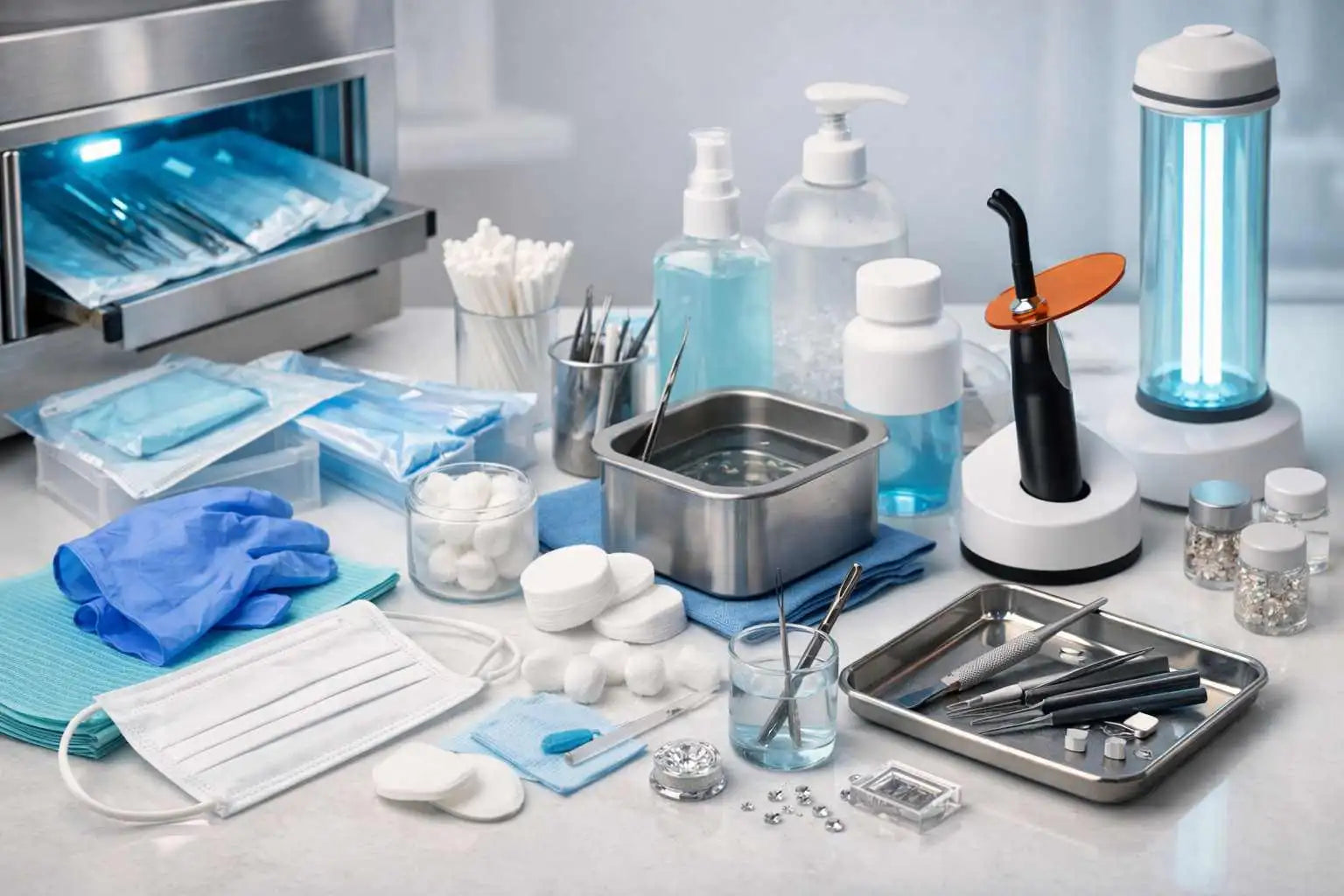
- Clean and organized work surface (no jewelry lying around, no bare tools on a questionable towel).
- Visible single-use consumables (micro-brushes, tips, protective covers).
- Hand hygiene + clean gloves (changed if necessary).
- Disinfection between each customer and storage of products.
- Explanation of what is being done and why.
3.2 Immediate red flags
- We offer a treatment for a tooth that is “not clean” (visible plaque, tartar, inflamed gum).
- Non-dental glue is used, or people talk about "super strong glue" without specifying which one.
- You are encouraged to make several pieces of jewelry without checking the area, occlusion, or shape of the tooth.
- All risks are minimized (“zero risk”, “never any problems”).
4. Materials and techniques: what a good practitioner uses
4.1 Adhesives: what you need to understand
Without getting into the chemistry, remember the essentials: a quality application relies on materials designed for the oral environment (humidity, temperature variations, chewing). "Generic" adhesives are not made for enamel and can cause problems in the long term.
4.2 Tooth preparation: neither too aggressive nor sloppy
The preparation must improve adhesion without damaging the enamel. Too aggressive = unnecessary risk. Too light = jewelry that falls off quickly. A good technician knows how to find the balance, and above all, explains what they are doing.
4.3 Placement: aesthetics + occlusal logic
The placement is a subtle art: the jewelry must be aligned, harmonious, and positioned in an area that minimizes impact. A reputable professional will assess your bite and avoid "at-risk" locations (areas prone to repeated impacts, friction, or gum contact).
5. Institute, salon, office: what are the differences?
5.1 Dental Practice
Often the most structured setting in terms of hygiene and understanding of the mouth. The advantage: medical expertise and the ability to refuse a procedure if contraindicated. The disadvantage: not all practices offer this service.
5.2 Institute / specialized salon
It can be excellent if the person is trained , meticulous, and uses appropriate materials. The advantage: aesthetic expertise, highly refined results, and a wide selection of jewelry. The key point: verifying the protocol and traceability.
5.3 “Event-based” installation (pop-up, home, “between appointments”)
This is where the risk increases: variable hygiene, temporary setup, and sometimes incomplete equipment. It's not automatically bad, but it's where you need to be most demanding regarding hygiene and protocol.
6. Common mistakes to avoid (5–10)
- Choose based solely on price (aggressive promotion, “express” installation without protocol).
- Relying solely on photos (a feed can be beautiful, without impeccable hygiene).
- Accepting placement on an unprepared tooth (plaque, tartar, inflammation).
- Do not ask for the protocol (preparation, bonding, control, aftercare).
- Accepting non-dental adhesive or products not suitable for the mouth.
- Placing too close to the gum (irritation, plaque buildup, discomfort).
- Multiplying jewelry at once without fit testing or occlusion validation.
- Ignoring pain signals (sensitive gums, painful tooth, abnormal sensitivity).
- Do not anticipate the withdrawal (how it is withdrawn, by whom, when).
7. Checklist / tips (safe) before making an appointment
- Ask: “Can you explain your 5-step application protocol ?”
- Check: gloves, consumables, disinfection, workstation.
- Ask the question: “What materials do you use (adhesive type, consumables)?”
- Ask: “How do you manage moisture (saliva) during application?”
- Ask: “What happens if the jewelry comes off quickly?”
- Evaluate: clarity of answers, transparency, professional posture (no aggression, no vagueness).
- Choose a suitable design: reasonable size, consistent placement, harmonious result.
- Planning for the aftermath: care tips, what to avoid in the first 24–48 hours, follow-up.
8. After application: how to maximize hold (and avoid problems)
8.1 The first few hours count
The outfit often looks good in the first few hours: avoid “testing” the jewelry with your tongue, avoid rubbing it and follow the exact instructions of the service provider.
8.2 Daily Hygiene
Dental jewelry is more likely to accumulate deposits around it if brushing is neglected. Gentle but thorough brushing, and a consistent routine, make all the difference to shine… and gum health.
8.3 When to consult or withdraw
If you experience persistent pain, bleeding gums, or an unusual catching sensation, don't delay. A clean removal is always preferable to home remedies.
Recommendations (useful links)
FAQ – All your questions about tooth gems/dental jewelry
1) Does the application of a dental jewel damage the enamel?
When the application is done correctly with appropriate products and proper preparation, the risk to the enamel is greatly reduced. Problems mainly arise with unsuitable adhesive, aggressive application methods, or DIY removal.
2) How long does it last?
The durability depends on the technique, the materials, your hygiene, and your habits (bruxism, hard chewing, friction). A professional application aims for a stable fit, but no reliable provider promises a "100% guarantee" for all individuals.
3) Does it hurt?
The procedure is usually painless. If you experience pain, it's a sign to take seriously (sensitive tooth, irritated gum, placement too close to the gum, or a pre-existing problem).
4) Is it possible to place jewelry on a tooth with a cavity, sensitivity or inflammation?
No, the problem needs to be addressed first. A reputable provider will refuse to perform the procedure if the tooth or gum is not in good condition.
5) Can it be done if you have braces (orthodontics)?
It depends on your situation and the available space. The safest option is to seek the advice of a professional who understands occlusion and orthodontic constraints.
6) How do I remove a dental jewel?
Removal should be done cleanly to avoid scratching the enamel. Avoid picking, scraping, or using tools. Ask the provider about their removal method, or consult a healthcare professional if necessary.
7) What should I do if the jewelry comes off?
Do not attempt to reattach it yourself. Keep it if possible and contact the service provider. A good professional will explain the procedure and assess the cause (humidity, preparation, impact, habits).
8) What is the best placement for a dental jewel?
The "best" placement is one that combines aesthetics with a low risk of impact/friction. A good practitioner avoids areas too close to the gum line and checks your tooth closure before confirming the placement.


Leave a comment
This site is protected by hCaptcha and the hCaptcha Privacy Policy and Terms of Service apply.