
Quick answer: dental jewelry, also called a tooth gem, is an ornament bonded to the visible surface of a tooth. The tooth is not pierced, but the practice is not risk-free: the American Dental Association advises against cosmetic tooth gems and jewelry because of possible negative health outcomes.
This is the central guide. It covers styles, prices, kits, products, application, removal, aftercare and risks, then directs readers to a specialist page for each question. It is general information, not a diagnosis or clinical protocol.
Summary
- What is dental jewelry?
- Types, styles and materials
- Dental jewelry prices
- Tooth gem kits and DIY kits
- Adhesive and compatible materials
- Application and removal
- Risks, precautions and hygiene
- Dental jewelry and whitening
- History, trends and inspiration
- Tooth Gems World collections
- Related articles
- Dental jewelry FAQ
What exactly is dental jewelry?
A dental jewel is a small decorative element applied to the visible surface of a tooth. It does not involve piercing or intentionally altering the tooth, but it is placed in a sensitive area: the mouth. That is why product choice, hygiene, placement and removal must be taken seriously.
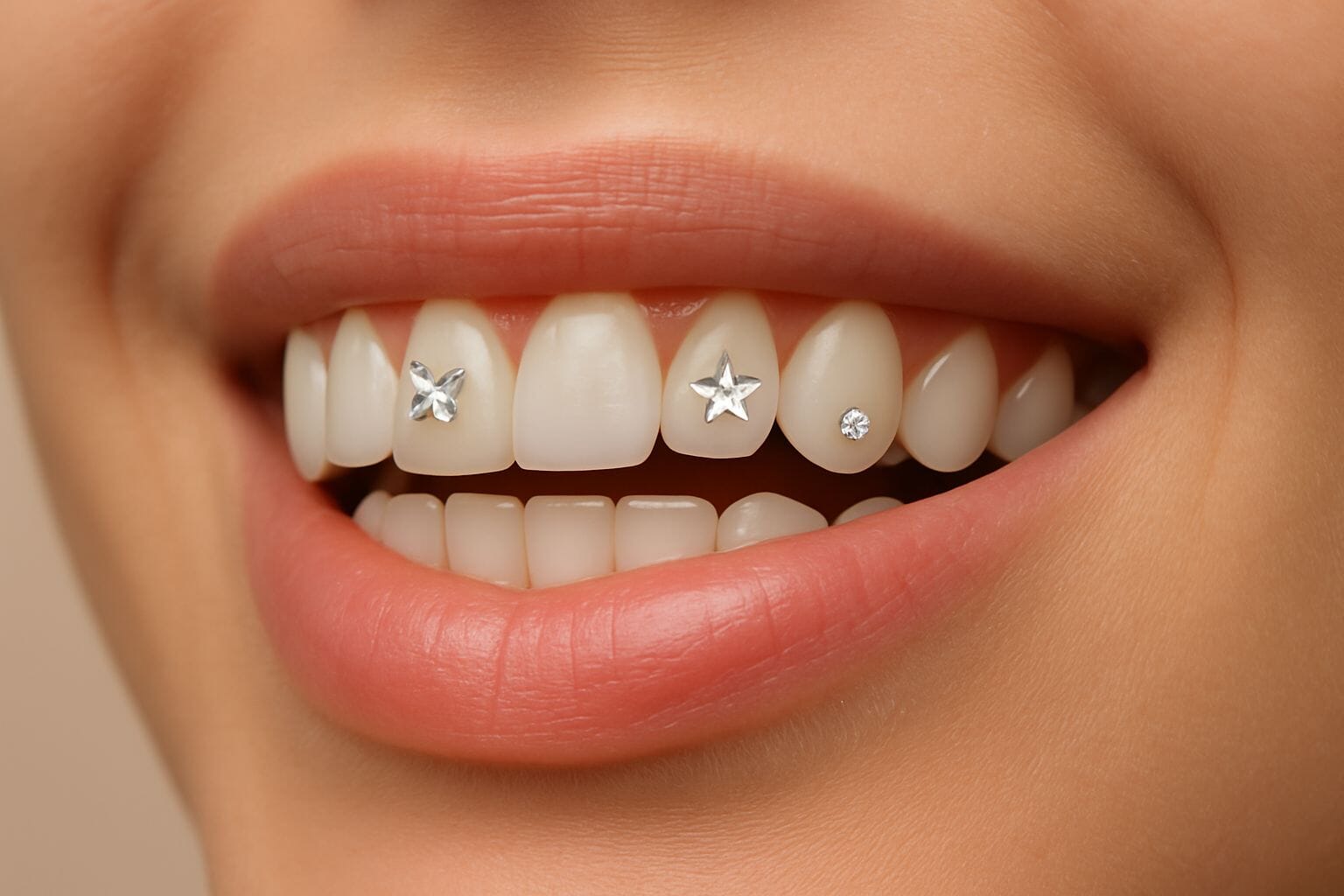
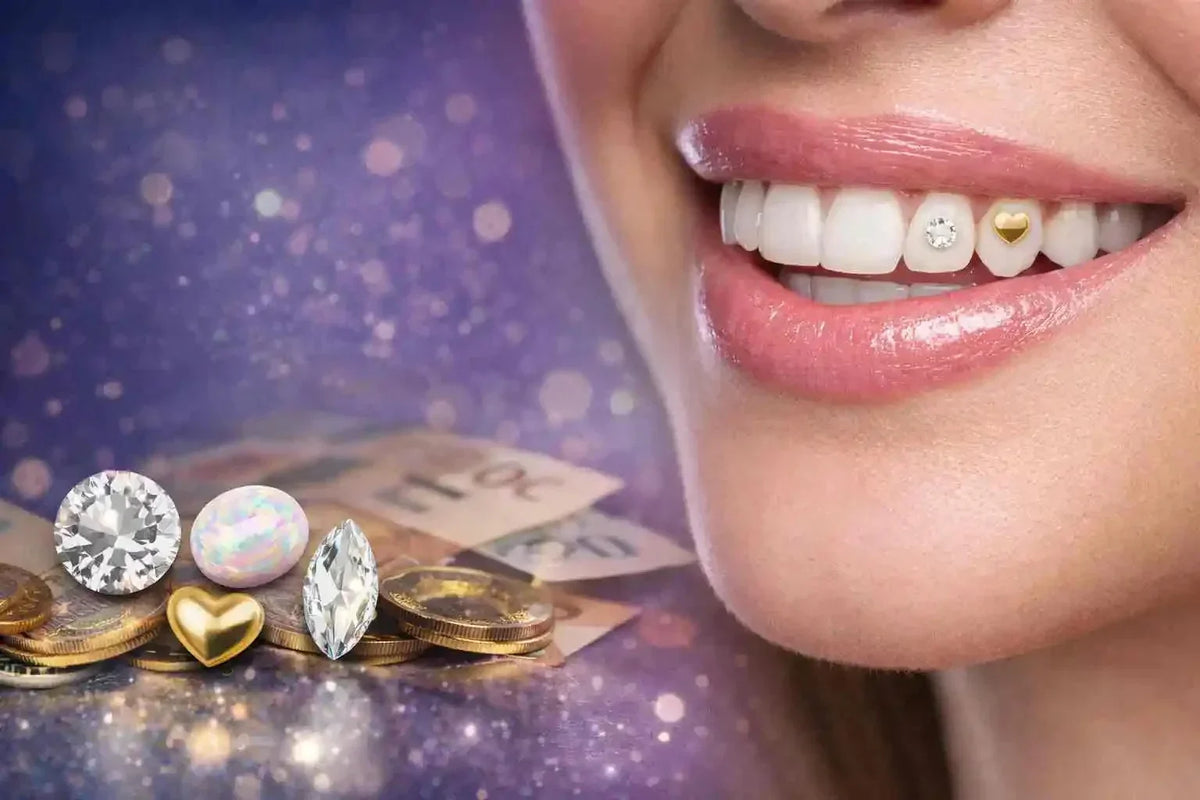
Dental jewelry can be a round crystal, a colored tooth gem, an opal, a gold design, a star, a heart, a butterfly, a navette or a more detailed composition. The goal is aesthetic: to add light to the smile, from a subtle detail to a more visible design.
Types, styles and materials
The right choice depends on the desired style, level of visibility and detail of the design.
- Round tooth gem: classic, bright and versatile.
- Shaped dental jewel: heart, star, butterfly, navette, marquise or diamond shape for a more creative look.
- Opal dental jewelry: pearly, softer and original effect.
- Gold dental jewelry: jewelry-like, more premium and more visible.
- Tooth gem composition: combination of sizes, colors or shapes to create a custom design.
A clear crystal usually gives a discreet and luminous effect. A shape or gold jewel creates a more identifiable result. A composition can build a true visual signature.
Gold, crystal, opal or shaped dental jewelry: how to choose?
There is no single best option. The best dental jewel is the one that fits the smile, personal style and desired visibility.
- Clear crystal: ideal for a first application or timeless result.
- Color: useful for a more fun or expressive touch.
- Opal: perfect for an iridescent, soft and original effect.
- 18K gold: suited to bolder looks and a jewelry finish.
- Shapes: useful for creating an identifiable design: heart, star, butterfly, navette and more.
For sizes, think about the final result: a smaller size gives a fine and discreet effect, while a larger size attracts more attention.
Tooth gem price: understanding the real cost
The price of a tooth gem depends on the jewel, material, size, shape, number of jewels, complexity of the design, application method and possible support. A simple crystal is usually more accessible than a gold jewel or a more elaborate composition.
To understand price differences by shape, material and finish, read the dedicated guide: tooth gem prices.
Tooth gem kits and DIY kits: what is the difference?
A kit may combine gems, accessories, a curing light, consumables and bonding products. Its existence does not guarantee that the items are compatible, that the practice is risk-free or that the user has the necessary skill.
- DIY kit: a consumer set whose contents, limits and instructions require careful review.
- Starter pack: a broader selection for organizing learning and equipment.
- Professional materials: technical products that require an understanding of their intended use, compatibility and applicable rules.
Before buying, check instructions, traceability, storage, curing-light compatibility and the removal plan. Compare DIY kits and read how to choose application equipment.
Tooth gem adhesive: why improvisation is unsafe
The word “glue” can be misleading: dental bonding is not a universal tube of adhesive. Technical products have different roles and must form a compatible system used according to their instructions.
Nail glue, super glue, strong household glue and domestic adhesives are not designed for the mouth or enamel and should be excluded. To understand product categories and selection criteria, read which adhesive for a tooth gem.
Application and removal: two steps not to trivialize
The condition of the tooth should be considered before application. Pain, unexplained sensitivity, suspected decay, a crack, irritated gums or orthodontic treatment are reasons to postpone and ask a dentist.
Removal should never mean scraping, pulling or using an improvised solvent. A dentist can remove the gem and residue, then inspect and polish the surface if needed.
Risks, precautions and hygiene
Oral-health organizations list plaque and debris retention, decay, gum inflammation, discoloration, enamel damage, sensitivity and chipped teeth among possible problems. Risk varies with initial oral health, placement, products, hygiene, length of wear and removal.
Careful application cannot support a “zero-risk” promise. Cleaning around the gem remains essential, and pain, inflammation, persistent sensitivity or looseness warrants dental advice.
Dental jewelry and whitening: which should come first?
When whitening is planned, it is generally better to do it before applying dental jewelry. This helps stabilize the tooth shade before choosing the jewel color, size and placement.
A dental jewel can also affect how the brightness of the smile is perceived. Timing, sensitivity and aftercare should therefore be considered.
To learn more, read: teeth whitening before dental jewelry.
History, trends and inspiration
Dental ornaments have existed in different cultures, with techniques and meanings that should not be confused with contemporary tooth gems. Today, dental jewelry is mainly associated with aesthetics, fashion and personal expression.
Where to get dental jewelry applied?
Choosing where or with whom to get dental jewelry applied matters. Look for a clean environment, a clear method, suitable products and honest explanations about precautions.
The key criteria are simple: hygiene, transparency, experience, jewel quality, aftercare explanation and ability to answer questions.
Read more here: where to get dental jewelry applied.
Discover Tooth Gems World collections
To explore dental jewelry and related application materials, visit the main collections:
Recommended reading path
This page is the center of the tooth-gem content cluster. Continue with the branch that matches your exact question:
- Choose: gem sizes and prices.
- Equip: equipment roles and bonding products.
- Prepare: pre-application checklist.
- Monitor: risks and warning signs, aftercare and wear duration.
- Remove: removal guide.
Dental jewelry FAQ
Are tooth gems risk-free?
No. Risk varies, but it is never zero. The ADA advises against cosmetic tooth gems and jewelry because of possible negative outcomes.
Can ordinary glue be used?
No. Nail glue, super glue and household adhesives are not designed for the oral environment.
Can a gem be applied to a sensitive tooth?
Pain or unexplained sensitivity should be assessed by a dentist before application is considered.
How long does a tooth gem last?
Retention varies with the product, method, position, hygiene and habits. A precise duration cannot be guaranteed.
How should the gem be cleaned?
Continue brushing the area carefully, clean around the raised edge and avoid playing with the gem or biting directly on it.
How should it be removed?
Do not scrape or pull it off. Ask a dentist to remove it and inspect the tooth surface.
Which style is easiest to start with?
A small gem and simple design are generally easier to position visually and clean than a crowded composition.
Sources and editorial method
Oral-health statements were cross-checked against identifiable dental organizations. Sources are separated from commercial pages and dated when the guide is updated.
- American Dental Association: Oral Piercing/Jewelry
- American Academy of Pediatric Dentistry: oral jewelry policy
- Oral Health Foundation: Tooth gems and grillz
Sources accessed September 4, 2026.
Conclusion
A tooth gem is an aesthetic choice that deserves transparent information. Before deciding, consider oral health, risks, cleaning, product quality and traceability, and the removal plan. This central guide then points to the most specific page so readers can avoid generic or conflicting advice.
Tooth Gems World editorial content, updated September 4, 2026. This information does not replace a dental examination, diagnosis or treatment.

Leave a comment
This site is protected by hCaptcha and the hCaptcha Privacy Policy and Terms of Service apply.