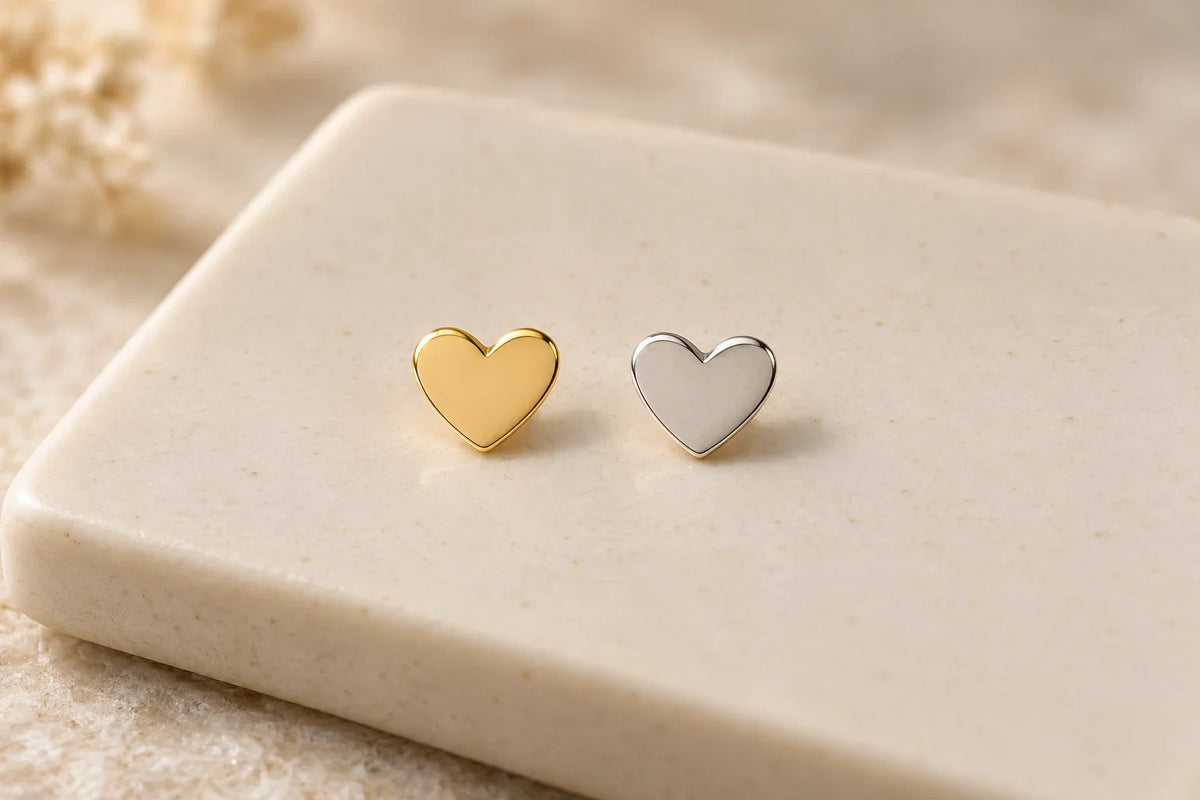
For a tooth gem, yellow gold adds a warm golden note, while white gold gives a cooler metallic look: your visual preference comes first.
Then compare the design, its dimensions and the material information, because colour alone tells you neither the full composition of the alloy nor whether an application is safe.
The image in this article illustrates the two colours for comparison and is not a product photograph representing a specific item.
What does “18K gold” mean?
According to the Gemological Institute of America (GIA), an 18-karat gold alloy, also called 18K, contains 75% pure gold, corresponding to a fineness of 750 parts per thousand.
The other metals in the alloy influence its colour, among other properties, but their identity and proportions can vary from one item to another.
An 18K white gold piece therefore remains a piece made from a gold alloy: its white colour does not mean it is silver.
Yellow gold or white gold: which look are you after?
Yellow gold for a clearly golden touch
If you already like warm-toned jewellery, yellow gold lets you bring that colour into the smile design you are considering.
A small golden heart can become the focal point of a simple composition without needing to add more motifs.
White gold for cooler metallic tones
If you usually prefer white-metal jewellery, this colour may feel closer to your aesthetic preferences.
The result also depends on the lighting, polished surface and design: white gold does not whiten teeth, and no colour automatically suits every smile.
Four checks before ordering
- Start by comparing the same design in both colours to isolate what actually changes in its appearance.
- Read the dimensions in millimetres instead of relying on the magnification in a photograph; our tooth gem size guide helps you think in proportion to the smile.
- View the photographs under neutral lighting and remember that a screen can alter how you perceive colours.
- Check the availability of the exact variant, as well as the information on the product page, before confirming your choice.
For example, the 18K gold Full Heart product page lists dimensions of 3 × 3.7 mm and a thickness of 0.5 mm, with yellow gold and white gold variants.
Comparing the two versions of this model at the same dimensions is more useful than comparing a large golden motif with a tiny white one.
Colour does not tell you everything about the alloy
General jewellery information is not a technical specification for the piece you are buying.
The GIA describes several possible metals in white gold alloys, including nickel or palladium; this does not establish their presence in a Tooth Gems World item.
The Full Heart product page specifies 18K gold without detailing the full alloy composition or any surface treatment.
So do not infer from its colour that a piece is nickel-free, hypoallergenic, rhodium-plated or not rhodium-plated.
If you have a known allergy or concerns about a metal, ask for precise information from the manufacturer and seek your dentist’s advice before considering an application.
The same precautions apply to both colours
The American Dental Association (ADA) advises against cosmetic tooth jewellery because of oral health risks, including plaque accumulation, tooth decay and enamel damage.
An 18K fineness guarantees neither a risk-free application nor how long the piece will stay in place.
If you have pain, irritated gums or a restored tooth, seek dental advice before taking your plans further.
This general information does not replace an examination or diagnosis; aesthetic choices come after an assessment of your oral health.
To prepare your questions, also read our guide to choosing where to have a tooth gem applied.
Frequently asked questions
Is white gold purer than yellow gold?
No: if both pieces are described as 18K gold, the stated fineness is the same, and their colour cannot be used to rank them by purity.
Is white gold always more discreet?
Not always: size, shape and reflections can make a white motif very noticeable, even alongside a yellow one.
Can the colour predict how long it will stay in place?
No: Tooth Gems World product pages explain that retention depends on factors including the application technique, the tooth surface and care; choosing a colour provides no guarantee.
Can yellow gold and white gold be mixed?
It is an aesthetic option to discuss as part of a design suited to the smile and dental situation, without assuming that a busier composition would be better.
Choose a colour, then check the item
Start with the colour you like to wear, compare the same design at its actual size and check the information that matters to you before buying.
You can then explore the 18K gold tooth jewellery and read each model’s product page to check its options and availability.
Sources and limitations
- GIA — Guide to white, yellow and rose gold, published 11 May 2018: fineness and general principles of jewellery alloys, without validating use in the mouth.
- ADA — Oral piercing and jewellery, updated August 2026: professional position and oral health risks.
Sources and product page accessed on 20 October 2026; suggestions about appearance are aesthetic pointers, with no medical promise or guarantee of retention.


Leave a comment
This site is protected by hCaptcha and the hCaptcha Privacy Policy and Terms of Service apply.