
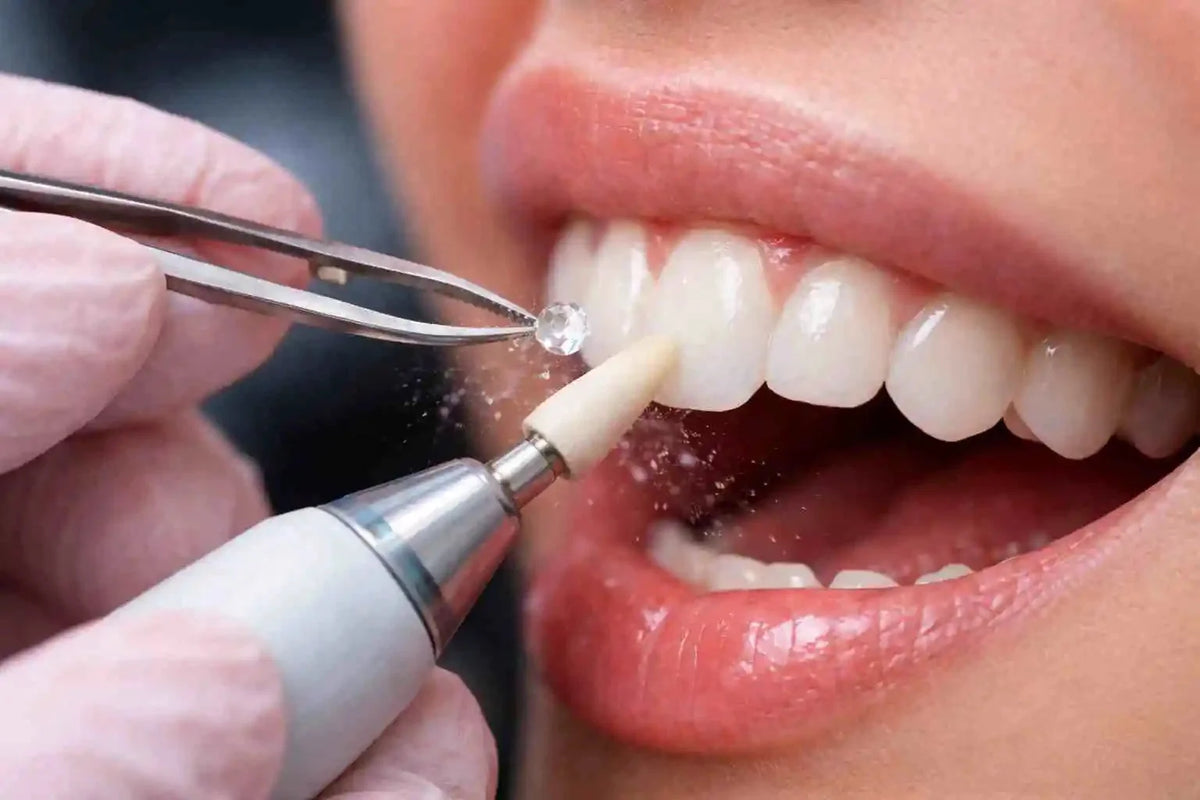
Quick answer: do not pull, scrape or try to dissolve a tooth gem at home. To limit risk to enamel, the most prudent option is to ask a dentist to remove the gem and residue and inspect the surface.
This guide explains decisions and warning signs. It does not describe a removal technique to reproduce yourself.
Why at-home removal is a problem
The gem and bonding material adhere to the tooth surface. Pulling with fingers or a tool may detach it unpredictably, scratch the surface, leave residue or cause pain and sensitivity. Lost enamel does not regenerate like skin.
What not to do
- Do not use pliers, a file, metal object or pointed instrument.
- Do not scrape the edge or residue.
- Do not pull a loose gem.
- Do not use acetone, nail-polish remover or chemicals not intended for the mouth.
- Do not rebond a loose gem.
- Do not ignore pain or irritated gums.
When to make an appointment
- You simply want to change or remove the gem.
- The gem is loose, catches or interferes with closing the mouth.
- The edge is difficult to clean or shows discoloration.
- Pain, sensitivity or inflammation appears.
- The gem has gone but the tooth remains rough or sensitive.
Breathing difficulty or another unusual symptom after a gem is lost requires urgent medical help.
What the dentist can inspect
Professional removal means more than making the gem disappear. A dentist can check the tooth, gum and any residue, then decide whether cleaning, polishing or further care is needed. Exact steps depend on the material and the condition of the tooth.
After removal
- Follow the instructions given after the check.
- Maintain gentle, regular brushing.
- Do not scrape an area that feels rough.
- Monitor pain, sensitivity, discoloration and inflammation.
- Wait for dental advice before considering another gem on the same area.
Reading path
To understand possible complications, read risks and prevention. To reduce buildup around a gem that remains in place, follow the aftercare guide. See the whole topic in the complete guide.
Frequently asked questions
Can I remove the gem if it is already loose?
Do not pull it. Avoid disturbing it and contact a dentist to check both the gem and tooth.
Is removal always painful?
No, but pain during or after removal should not be dismissed and should be reported.
Can the tooth remain rough?
Residue or a surface change may create that sensation. Do not scrape it; ask a dentist to inspect and polish the area if appropriate.
When can another gem be applied?
There is no universal waiting period. The tooth and gum should be checked before another application.
Sources and limits
- American Dental Association: Oral Piercing/Jewelry
- American Academy of Pediatric Dentistry: oral jewelry policy
- Oral Health Foundation: Tooth gems and grillz
Tooth Gems World editorial content, updated September 4, 2026. Sources accessed September 4, 2026. General information only; it does not replace a dental examination, diagnosis or treatment.
Questions about a product or an order?
The Tooth Gems World team can help you check a product’s specifications, understand what a kit includes or locate an order. For health or treatment advice, speak to a dentist.
- Contact customer service through the form or live chat.
- Check delivery rates and estimated times and our payment methods.
- After ordering, find your purchases in your customer account or visit our Help Centre.

Leave a comment
This site is protected by hCaptcha and the hCaptcha Privacy Policy and Terms of Service apply.