Equipment maintenance and hygiene: a complete protocol for safe practice

Entretien du matériel de pose et hygiène : protocole complet pour une pratique sûre

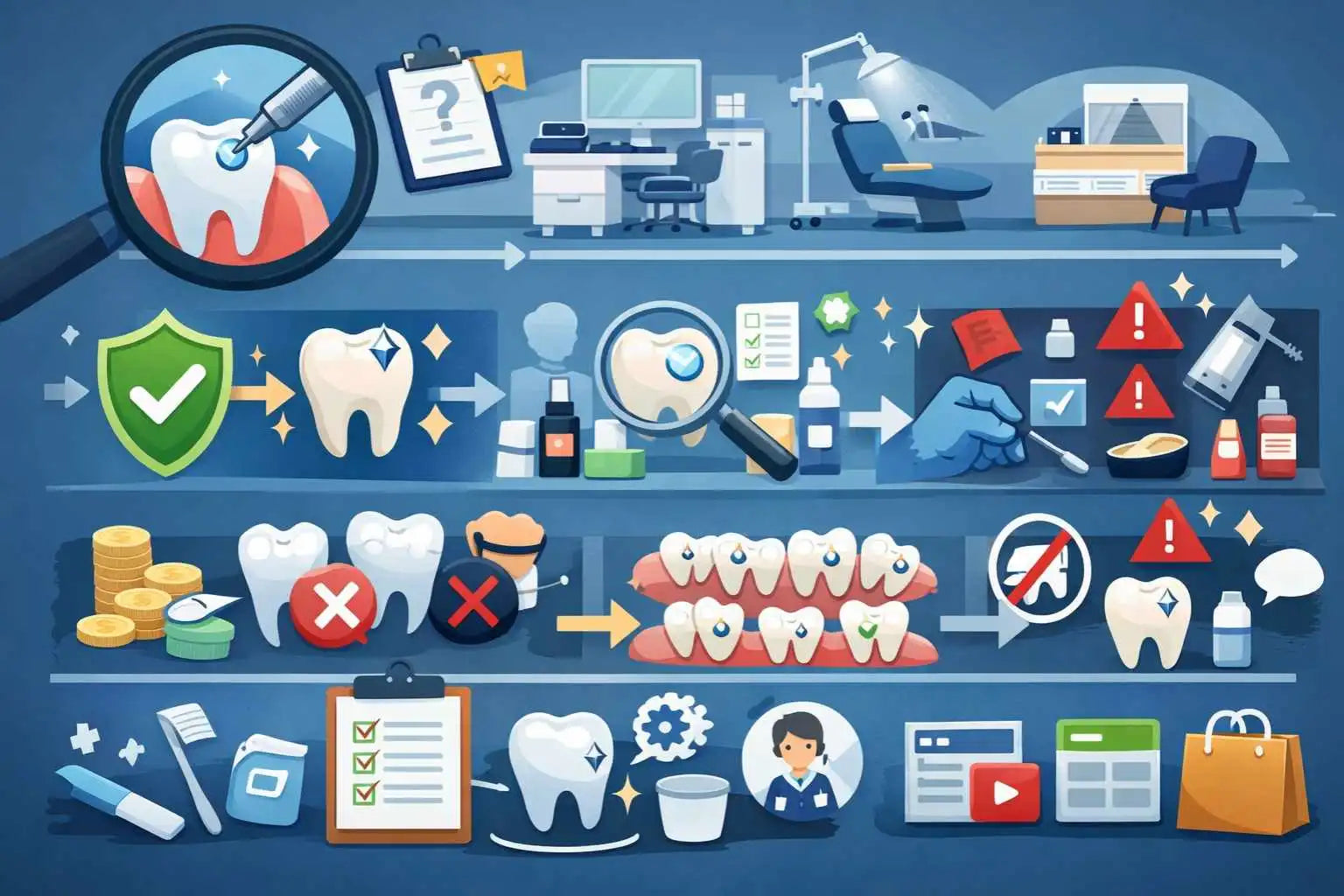
Quick answer: For safe application, equipment maintenance follows a simple logic: clean (remove residue), then disinfect (reduce the microbial load), and, when the tool is intended for intraoral contact, sterilize if the equipment allows. The key is consistency: a clear protocol, repeated identically, client after client.

Summary

  • 1. Hygiene: your first sign of professionalism
  • 2. Cleaning vs. disinfection vs. sterilization: understanding (really) the difference
  • 3. Classifying your equipment: the “infectious risk” logic (Spaulding type)
  • 4. Protocol after each client: simple routine, zero grey areas
  • 5. Workspace management: the environment is as important as the tool
  • 6. Storage, transport, traceability: keeping things “clean”
  • 7. Products, consumables and compatibilities: avoid incorrect mixtures
  • 8. Common mistakes: those that ruin hygiene (and reputation)
  • 9. Checklist / tips (safe): your action plan
  • 10. Recommendations (useful links)
  • 11. FAQ: All your questions about hygiene when applying dental gems
  • SEO data (optional)

1. Hygiene: your first sign of professionalism

In the world of dental aesthetics , there's what the client sees… and what they feel. A spotless table, precise movements, and meticulously handled equipment: this is often what transforms a simple service into a premium experience. Hygiene isn't a technical detail; it's a sign of trust.

And it's also a subtle business advantage: fewer damaged tools, fewer replacements, fewer unforeseen events. In short: more regularity, more peace of mind.

Important: This guide provides general best practices. It does not replace training, manufacturer recommendations, or regulations applicable to your business and country. When in doubt, always choose the most protective solution.

2. Cleaning vs. disinfection vs. sterilization: understanding (really) the difference

Cleaning: the non-negotiable foundation

Cleaning removes visible dirt and residues (glue, dust, deposits). Without cleaning, disinfection or sterilization may be less effective. This step is crucial for everything else to work.

Disinfection: reducing the microbial load

Disinfection aims to eliminate a large proportion of microorganisms on surfaces or certain tools. It depends on the product, its concentration, and especially its contact time (the famous “action time” which is often ignored).

Sterilization: the highest objective

Sterilization is the most demanding level: it aims for the total elimination of microorganisms. In practice, hygiene recommendations in dental settings emphasize the importance of structured reprocessing carried out by trained personnel, following a “clean → condition → treat → store” logic.

To delve deeper into the definitions and overall logic of “sterilization/disinfection” in a dental context: CDC – Sterilization and Disinfection (Dental Infection Control)

3. Classifying your equipment: the “infectious risk” logic (Spaulding type)

Rather than improvising "by feel", hygiene standards classify devices according to their level of contact with tissues:

  • Critical : penetrates a sterile area / blood → sterilization expected.
  • Semi-critical : contact with mucous membrane (mouth) → high treatment level, sterilization if possible depending on the tool.
  • Non-critical : contact with intact skin / environment → appropriate cleaning + disinfection.

In the application of rhinestones, everything that comes close to the oral cavity must be treated with a minimum of “semi-critical” rigor, and ideally using tools and consumables designed for this purpose.

A useful reference for understanding this classification logic: SF2H – Guide to good practices for the processing of reusable medical devices

4. Protocol after each client: simple routine, zero grey areas

Step A — Separate “dirty” and “clean”

Before even discussing products, the golden rule is: a dirty zone (receiving used equipment) and a clean zone (equipment ready for use). If everything gets mixed up, the protocol collapses.

Step B — Pre-treat immediately

Do not allow the residue to dry: the longer it dries, the harder it is to remove. As soon as the service is finished, place the affected instruments in a dedicated container (according to the equipment's compatibility).

Step C — Clean (manually or with assistance)

Clean using a suitable method: mechanical action (appropriate brush) + compatible product. Pay particular attention to "trap" areas: hinges, grooves, corners.

Step D — Rinse and dry thoroughly

A tool that isn't rinsed properly can retain product residue. A tool that isn't dried properly can compromise storage and certain subsequent processes. Make it a habit to dry it thoroughly.

Step E — Disinfect or sterilize according to the category

Apply the treatment according to the level of risk and the compatibility of the equipment. Strictly adhere to the parameters: dilution, temperature, contact time, and method of application.

Step F — Store properly

The best protocol in the world is useless if clean equipment is left on a questionable surface. Store ready-made equipment in a closed, dry, and clearly marked area.

5. Workspace management: the environment is as important as the tool

Many “silly” contaminations come from the environment: phone touched with gloves, drawer handle, bottle handled during application… The reflex to adopt: limit points of contact and organize the workstation so as not to improvise in the middle of the action.

The 4 pillars of a controlled work area

  • Surfaces : clean then disinfect between each customer (cleaning before disinfection is essential).
  • Barriers : disposable protective coverings on frequently touched areas.
  • Hand hygiene : before/after, and whenever changing tasks.
  • Logical flow : we do not “go back” from dirty to clean.

6. Storage, transport, traceability: keeping things “clean”

Properly treated equipment must then be protected . Storage is an integral step, not a detail.

Good storage practices

  • Closed, clean, dry cabinets/boxes.
  • Separate material: ready to use vs to be reprocessed .
  • Simple rotation: “first processed, first used”.
  • Visual inspection: if it's damp, damaged, questionable… we re-treat it.

Traceability (simple but effective)

Without overcomplicating things, you can maintain basic traceability: reprocessing date, batch/product used (if relevant), and observations in case of an incident (damaged tool, torn bag, etc.). This professionalizes your practice and helps you correct problems quickly.

7. Products, consumables and compatibilities: avoid incorrect mixtures

Two common pitfalls are: (1) choosing a product simply out of habit and (2) mixing products incompatible with certain materials. In a clean approach, your rule is simple:

  • One product = one clear use (surface, instrument, specific area).
  • A notice = an authority : if the manufacturer says "do not", there is no negotiation.
  • Contact time respected: a wipe that is wiped too quickly does not have time to act.

Pro tip: keep a mini "reminder" at your workstation: which product for which area, and for how long. This avoids 80% of mistakes.

8. Common mistakes (5–10): those that ruin hygiene

  • Confusing clean with disinfected : a "trace-free" tool can still remain contaminated.
  • Disinfecting without cleaning : residues can protect microorganisms.
  • Ignore the product contact time .
  • Reusing a disposable consumable “just once”.
  • Contaminated gloves that touch the phone, bottles, drawers, then back to the mouth.
  • Store clean items in the open air or in a dusty area.
  • Forget about contact areas : handles, switches, carpets, trays.
  • Mix the dirty area and the clean area on the same work surface.
  • Products unsuitable for the equipment : degradation, micro-cracks, loss of efficiency.
  • Lack of routine : “one time yes, one time no” = risk and inconsistency.

9. Checklist / tips (safe): your action plan

Before the customer

  • Prepare a decluttered workstation: fewer objects = fewer contacts.
  • Only provide what will be used during the service.
  • Check that the “clean” equipment is stored correctly and ready.

During the break

  • Avoid touching unnecessary objects (phone, keyboard, etc.).
  • If changing tasks: hand hygiene / change gloves as needed.
  • Use single-use consumables when specifically designed for that purpose.

After the installation

  • Immediately dispose of the used equipment in the dirty area .
  • Apply the routine: cleaningrinsingdryingdisinfection/sterilizationstorage .
  • Clean and then disinfect the affected surfaces.

Note: If you are a beginner, the safest approach is to opt for as many single-use consumables as possible and to use instruments designed to be properly reprocessed.

10. Recommendations

11. FAQ: All your questions about hygiene and maintenance when applying dental gems

What is the difference between cleaning and disinfection ?

Cleaning removes residue and dirt. Disinfection acts on microorganisms. Without prior cleaning, disinfection may be less effective.

Do I need to sterilize all the instruments?

It all depends on the level of contact and the compatibility of the instruments. Tools close to the oral cavity must be handled with great care, and sterilization should be prioritized when the equipment is designed for it.

Why is the contact time of a disinfectant so important?

Because effectiveness depends on this action time. Wiping too quickly is like “stopping the film in the middle”: the product hasn’t had time to do its job.

How to avoid cross-contamination ?

By separating dirty/clean areas, limiting the objects touched during the application, and changing gloves or practicing hand hygiene as soon as you change tasks.

Can a "disposable" consumable be reused if it is disinfected?

No: a disposable item is designed for single use. Reusing it creates a risk and can also degrade the quality of the action.

How often should surfaces (table, lamp, bottles) be disinfected?

Between each customer, and immediately if a surface has been touched with potentially contaminated gloves. Consistency is your best ally.

What signs indicate that an instrument needs to be replaced?

Rust, cracks, damaged surfaces, stiff mechanism, areas impossible to clean properly: if integrity is compromised, reprocessing becomes uncertain.

Does hygiene affect how well rhinestones last?

Indirectly yes: a controlled environment and clean equipment improve the regularity of the movement, the preparation and the overall quality of the service.

Leave a comment

This site is protected by hCaptcha and the hCaptcha Privacy Policy and Terms of Service apply.

Reading next

Bien choisir où se faire poser un bijou dentaire | Guide fiable & conseils sécurité
Comparatif colles dentaires vs para-dentaires : différences, usages et critères