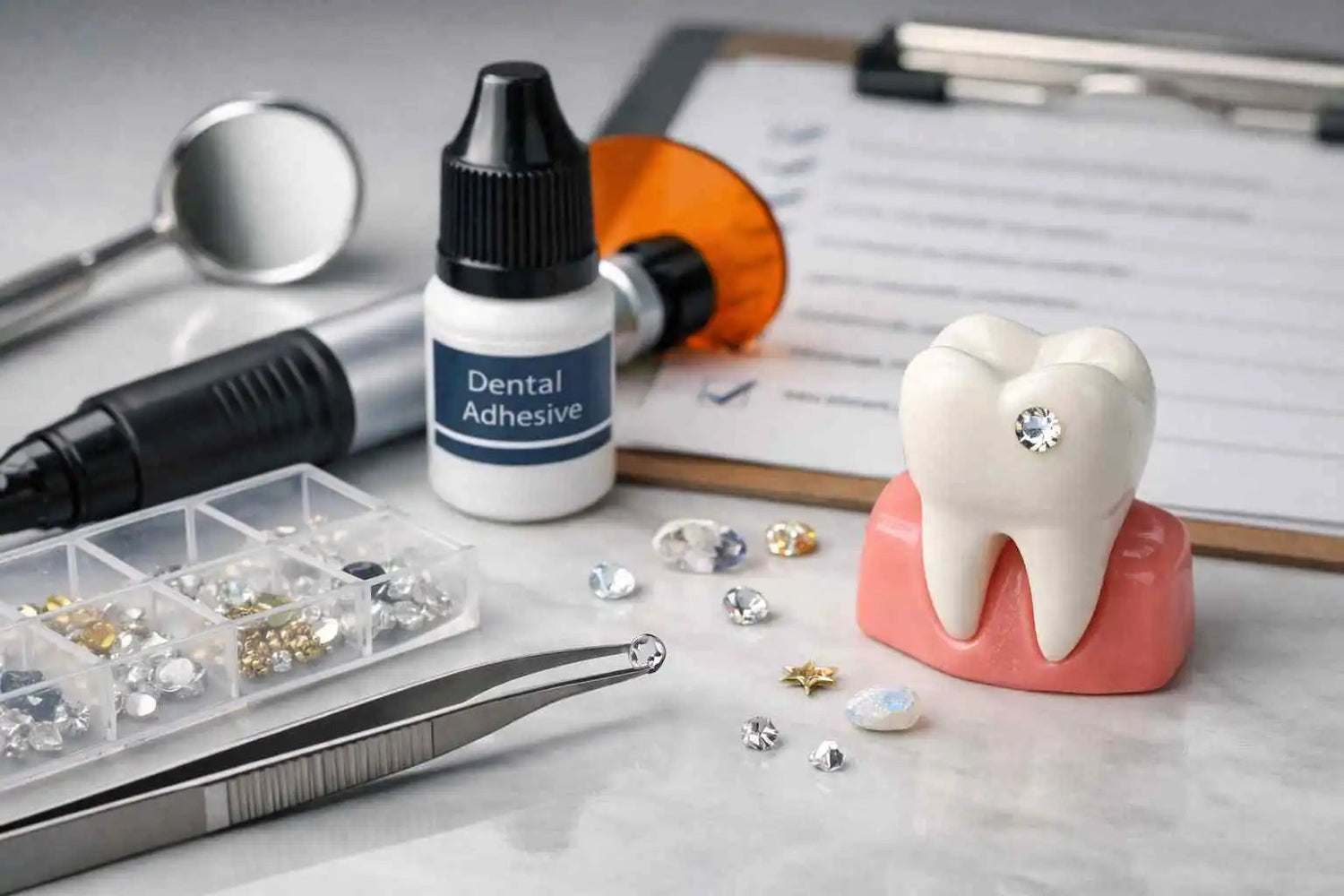
In short: this FAQ answers the main questions about tooth gems and links each one to a specialist guide. The essential point is that a tooth gem is a cosmetic choice that is not risk-free. The American Dental Association advises against cosmetic tooth gems and jewelry because of possible negative outcomes.
These answers are informational. They do not replace a dentist’s examination, product instructions or the rules that apply in your country.
Before considering application
What is a tooth gem?
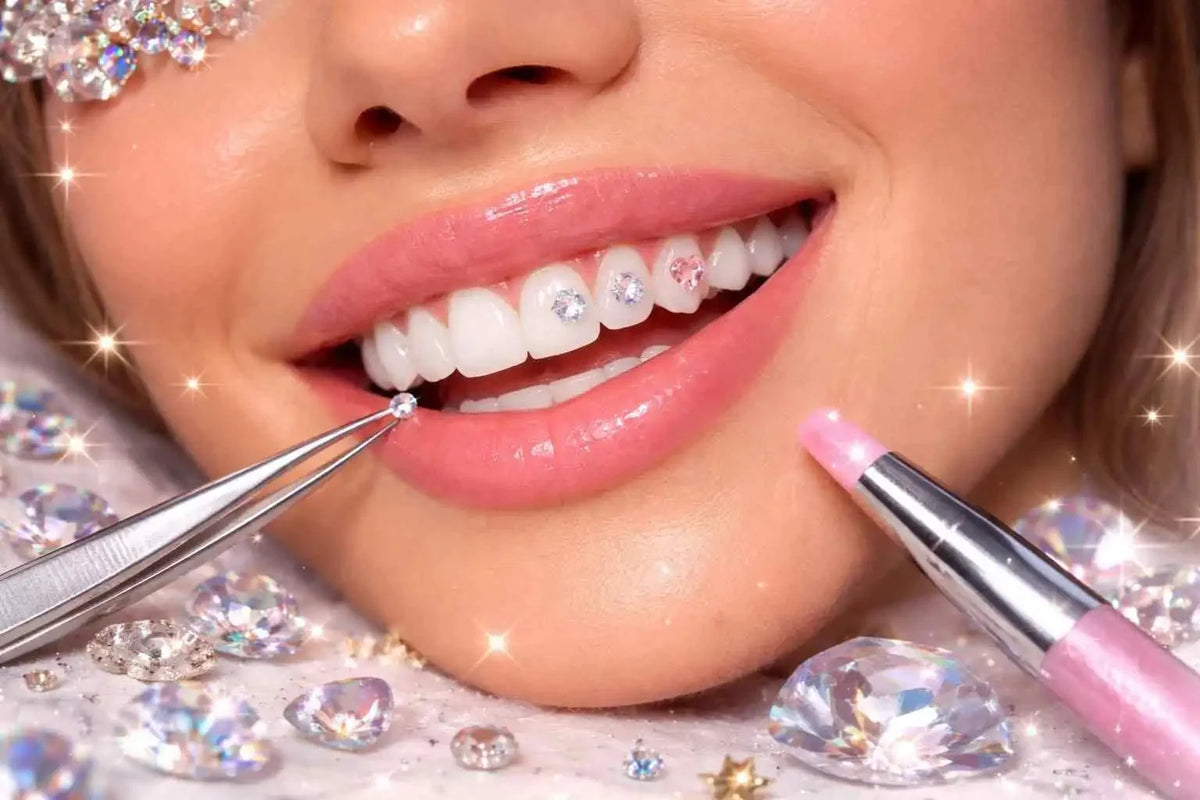
It is a small ornament bonded to the visible surface of a tooth. The tooth is not pierced, but the gem creates an additional raised edge that must be cleaned.
Should I talk to a dentist first?
Yes, that is the most prudent choice. The Oral Health Foundation recommends talking to a dentist to understand the risks and check that teeth and gums are healthy.
When should application be postponed?
Pain, unexplained sensitivity, suspected decay, a crack, damaged enamel, irritated gums or orthodontic treatment warrant dental advice before any decision. Use the pre-application checklist.
Risks and safety
Are tooth gems safe?
No cosmetic tooth gem is risk-free. Dental organizations identify plaque retention, decay, gum inflammation, discoloration, sensitivity, enamel damage and chipped teeth among possible concerns.
Does professional application remove all risk?
No. A clean setting, documented products and clear information may reduce some factors, but they cannot support a “zero-risk” promise.
Which signs warrant attention?
Pain, persistent sensitivity, red or swollen gums, bleeding, looseness, roughness or an area that is difficult to clean warrant dental advice. Read the risk guide.
Products and “glue”
Can nail glue or super glue be used?
No. Household adhesives are not designed for enamel, saliva and oral tissues.
Is there a universal tooth gem glue?
No. “Glue” often describes a system of products with different roles. Intended use, compatibility, curing light, batch, date, storage and instructions all need checking.
Does long retention prove safety?
No. Retention alone does not establish compatibility, hygiene, effects on enamel or safe removal. Read the bonding-products guide.
Price, wear and guarantees
How much does a tooth gem cost?
Price varies with the gem, material, design, service and local market. Compare what is included, not only the displayed amount. See the price guide.
How long does it last?
Wear depends on the products, method, placement, hygiene and habits. An exact duration cannot be guaranteed. See wear and retention.
Does a lost gem prove poor application?
Not by itself. Several factors may be involved. The context and tooth should be checked rather than immediately rebonding it.
Daily aftercare
Should the area around the gem be brushed?
Yes. Avoiding the area would encourage plaque accumulation. Brushing should remain regular and thorough, using fluoride toothpaste and a soft brush under general oral-hygiene guidance.
Which habits should be avoided?
Do not play with the gem, test it with the tongue, bite directly on it or scrape its edge. See the aftercare guide.
What if the gem becomes loose?
Do not pull or rebond it. Reduce handling and seek dental advice.
Removal and another application
Can I remove a tooth gem myself?
Do not pull, scrape or use a solvent. The most prudent option is to have a dentist remove it.
What can the dentist check?
They can inspect the tooth, gum and residue, then decide whether cleaning, polishing or treatment is needed.
When can another gem be applied?
There is no universal waiting period. The condition of the tooth and gum should guide the decision. Read the removal guide.
DIY, provider and gem choice
Is a DIY kit automatically suitable for beginners?
No. A kit does not guarantee compatibility or safety. Review its contents, instructions, limits and local rules, and ask a dentist before considering a gem.
How should I choose where to have it applied?
Check the legal framework, hygiene, product traceability, risk information, aftercare and removal plan. See the provider guide.
Which size should I choose?
Compare the gem’s actual dimensions with tooth width, placement and the space needed for cleaning. See the size guide.
Reading path
- Complete guide: overview.
- Hygiene and safety: practical prevention.
- Equipment: product-family roles.
Sources and method
- American Dental Association: Oral Piercing/Jewelry
- American Academy of Pediatric Dentistry: oral jewelry policy
- Oral Health Foundation: Tooth gems and grillz
Tooth Gems World editorial content, updated September 4, 2026. Sources accessed September 4, 2026. General information only; it does not replace a dental examination, diagnosis or treatment.


Leave a comment
This site is protected by hCaptcha and the hCaptcha Privacy Policy and Terms of Service apply.